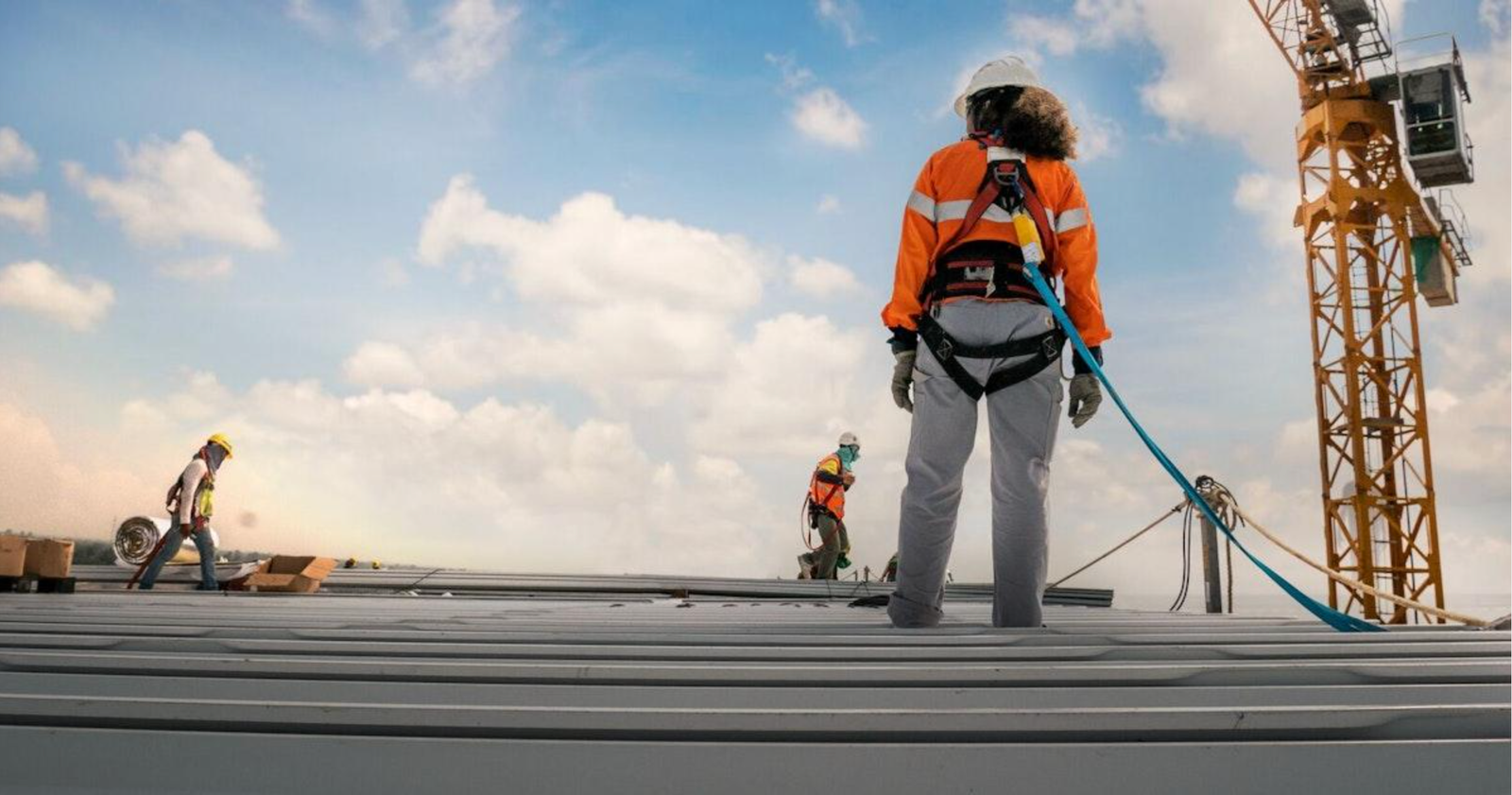
Falls from Height: Why Are We Still Getting It Wrong?
Falls from height remain one of the most persistent causes of fatal and serious injury in British workplaces. Despite decades of legislation, guidance, training and improvements in equipment, people continue to be seriously injured while carrying out activities that should be both foreseeable and manageable.
The latest HSE figures make uncomfortable reading. 31 workers were killed following falls from height during 2025/26, making this the single largest category of fatal workplace accident. Construction also recorded the highest number of fatalities of any main industry sector, with 25 deaths. HSE Media Centre
So why, in 2026, are we still seeing the same type of incidents?
The problem is often planning, not PPE
When working at height is discussed, attention can quickly turn to harnesses, lanyards, scaffolds, MEWPs and other equipment. These are important, but they come relatively late in the risk-control process.
The more fundamental questions should be asked much earlier:
Does the work need to be carried out at height at all? Can the risk be eliminated through the design or method of construction? If it cannot be eliminated, how can the work be planned so that collective protection is provided before relying on individual behaviour or personal protective equipment?
This is where effective risk management begins.
A well-written risk assessment completed shortly before work starts cannot compensate for poor decisions made during design, planning or procurement.
Fragile roofs remain a particular concern
A recent HSE prosecution provides a striking example.
In August 2026, a North-East building contractor was fined following an incident in Northumberland in which a 24-year-old bricklayer fell through a polycarbonate roof sheet while undertaking roof repairs. He fell approximately eight feet onto a concrete floor and suffered two broken vertebrae and a fractured sternum.
The HSE investigation found there was no risk assessment or safe system of work for the activity and inadequate measures to protect those carrying out the work at height. HSE Media Centre
The circumstances are particularly relevant because fragile roof materials are hardly an unknown or emerging hazard.
Rooflights, translucent panels, deteriorated sheeting and other fragile surfaces should be identified before work starts and incorporated into the planning of the activity.
Start with the design
For construction projects, CDM 2015 requires risks to be considered during the pre-construction phase.
Designers should consider whether foreseeable risks can be eliminated or reduced through design. The Principal Designer has an important role in planning, managing, monitoring and coordinating health and safety during the pre-construction phase. HSE
This means considering not simply how a building will be constructed, but how people will subsequently access, clean, inspect, maintain, repair and eventually dismantle it.
Consider something as simple as rooftop plant.
If equipment requires servicing twice every year, what happens for the next 20 years?
How will engineers reach it? Is there permanent safe access? Are there fragile surfaces nearby? Is edge protection provided? Can replacement equipment eventually be removed safely? Has the structure been designed for those activities?
Those decisions can have far greater influence on safety than a method statement produced shortly before maintenance begins.
RAMS still need to reflect the actual job
Where work at height cannot be avoided, the risk assessment and method statement should reflect the real conditions.
Generic wording such as “appropriate PPE will be worn” or “operatives will exercise caution” does little to control a significant fall risk.
Good planning should identify the working location, access arrangements, edge and opening protection, fragile materials, equipment required, ground conditions where access equipment is used, rescue arrangements where appropriate and who is responsible for supervising the activity.
Most importantly, the controls described in the RAMS need to exist on site.
Familiar work can still be high-risk work
One of the challenges within health and safety is that repetition can normalise risk.
A roofing contractor may have completed hundreds of roofs. An engineer may have climbed the same access ladder dozens of times. A maintenance team may have carried out an activity for years without incident.
That history does not demonstrate that the activity is safe.
It may simply demonstrate that the weaknesses in the system have not yet resulted in an accident.
The message for clients and contractors
The continued prevalence of falls from height shows why health and safety needs to be considered as part of project planning rather than as an administrative exercise once work is ready to start.
The objective is not simply to produce documentation.
It is to create conditions in which people can carry out their work safely.
At Adept Safety, our approach is based around practical risk management: identifying significant risks early, challenging unsuitable arrangements and helping clients and contractors develop proportionate controls that can actually be implemented on site.
Good safety starts before anyone leaves the ground.